← Case studies

01 / FLAGSHIP PLATFORM

LifeOS

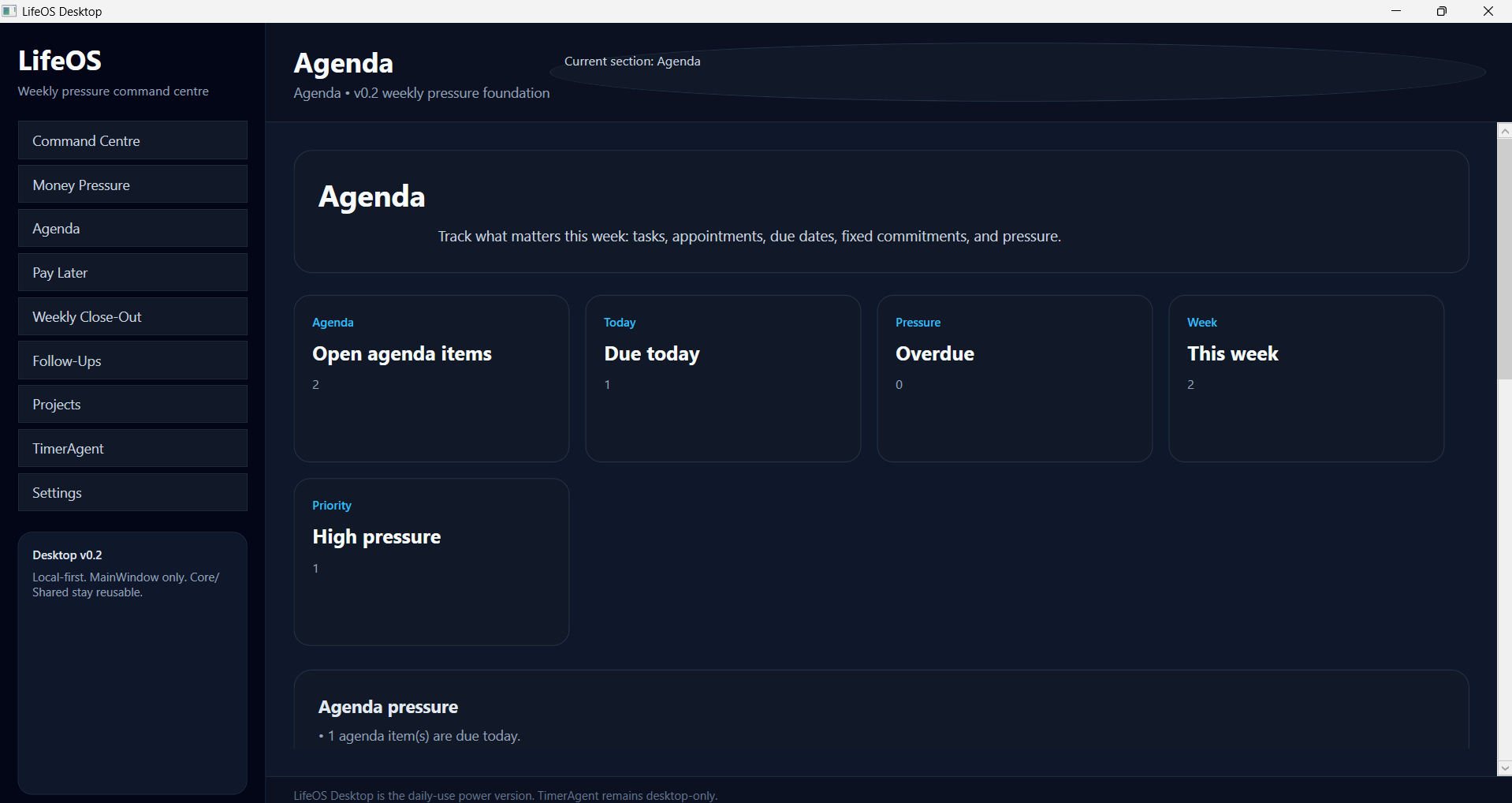
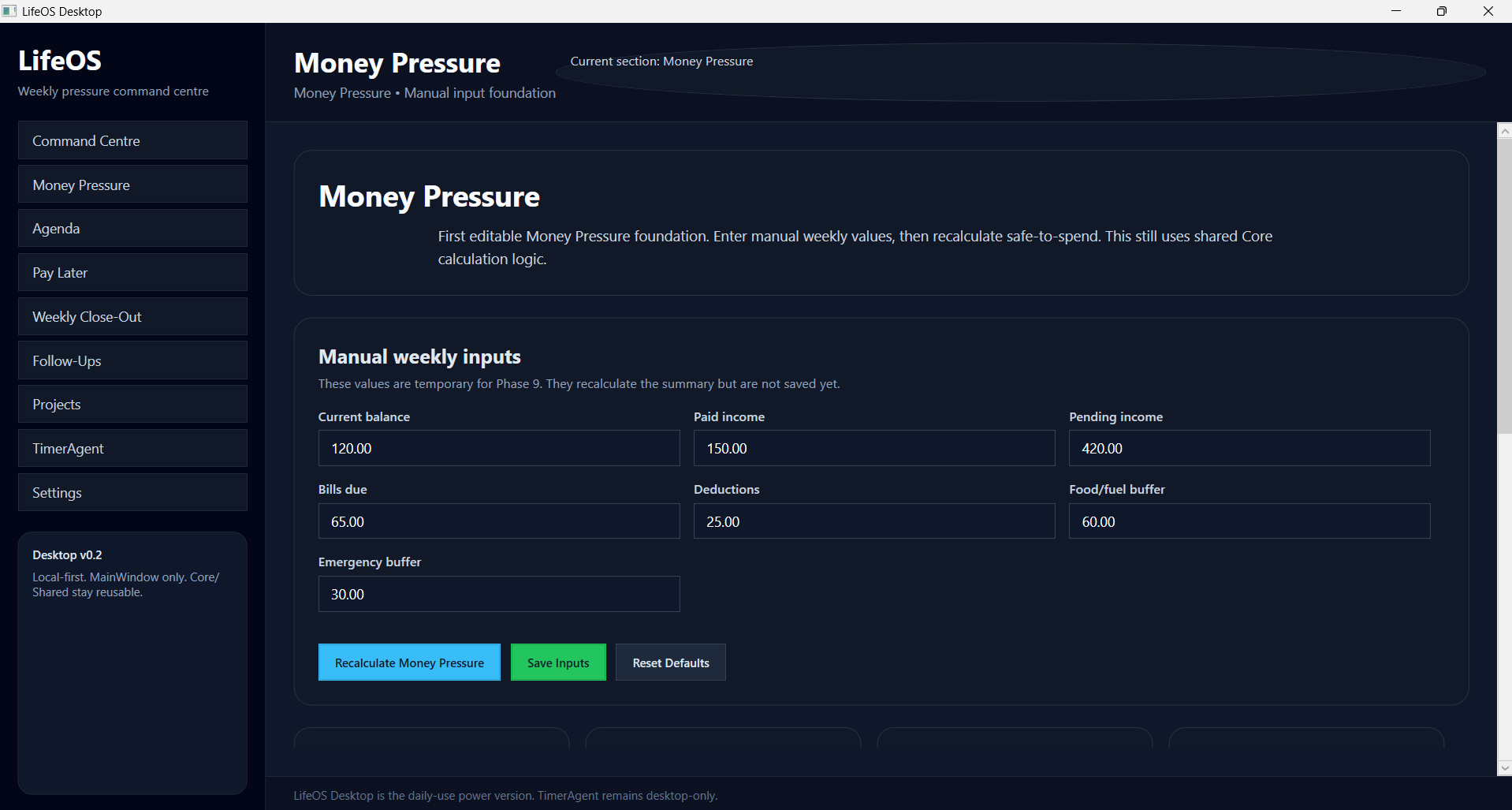
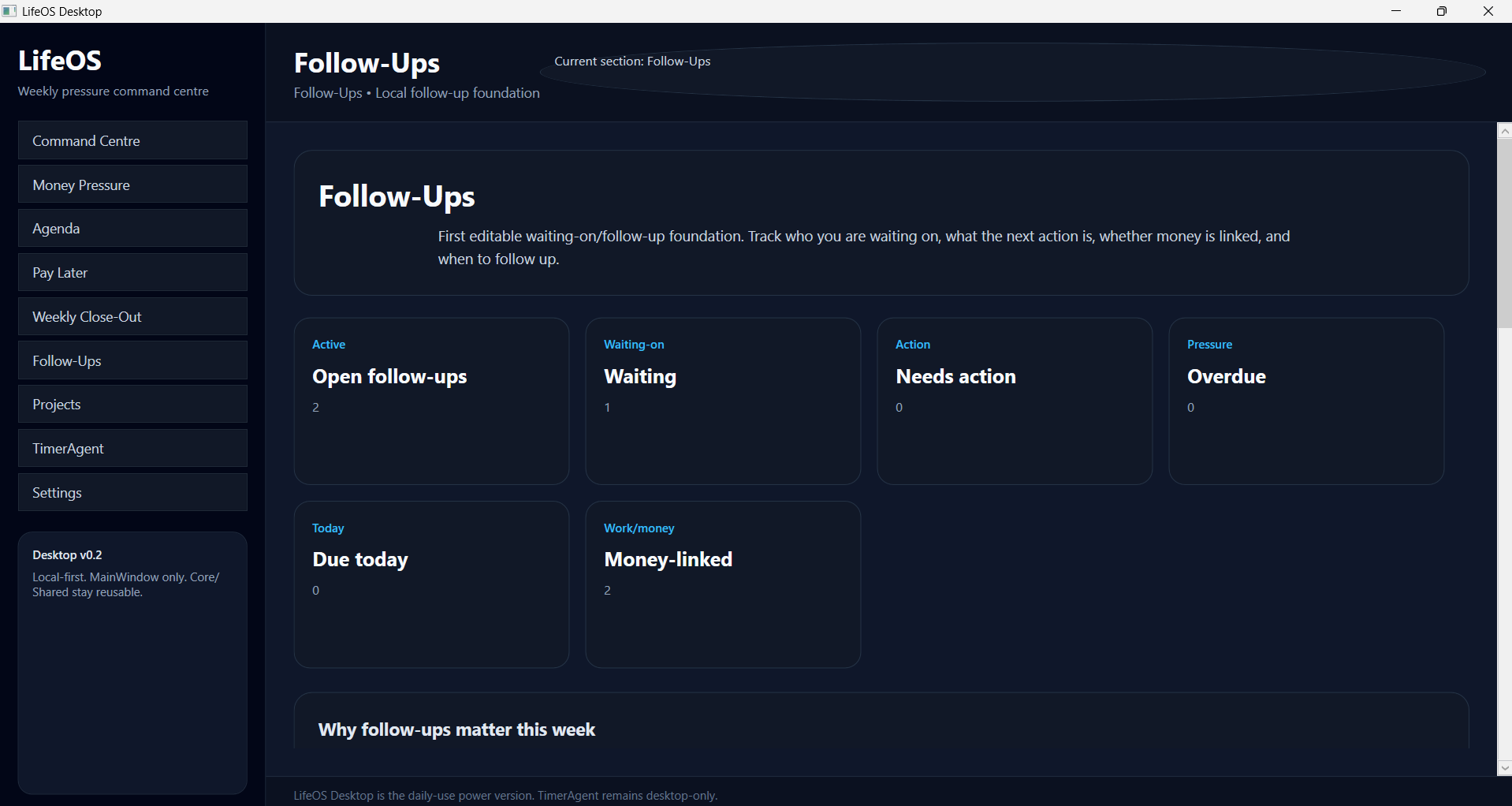
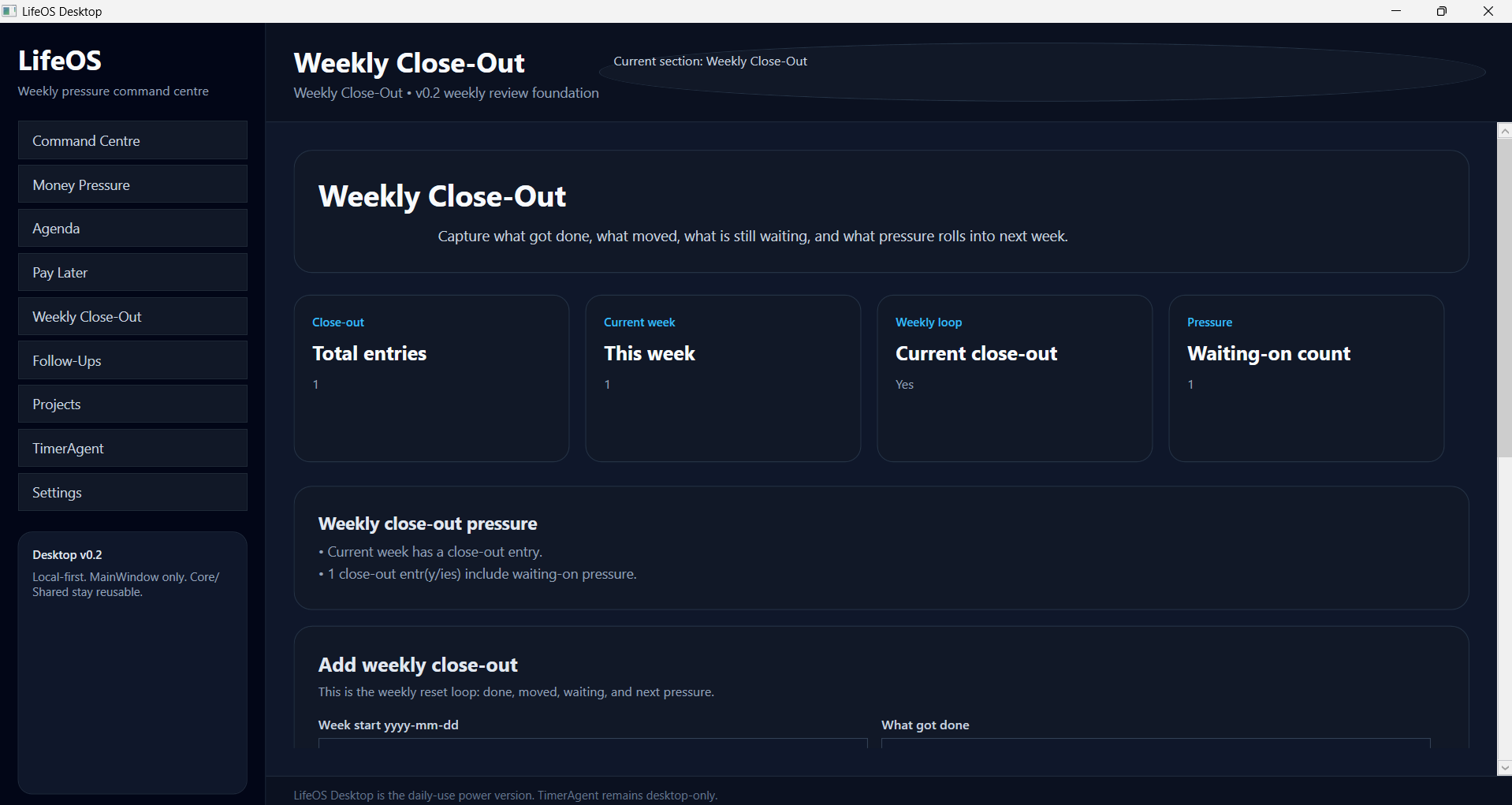
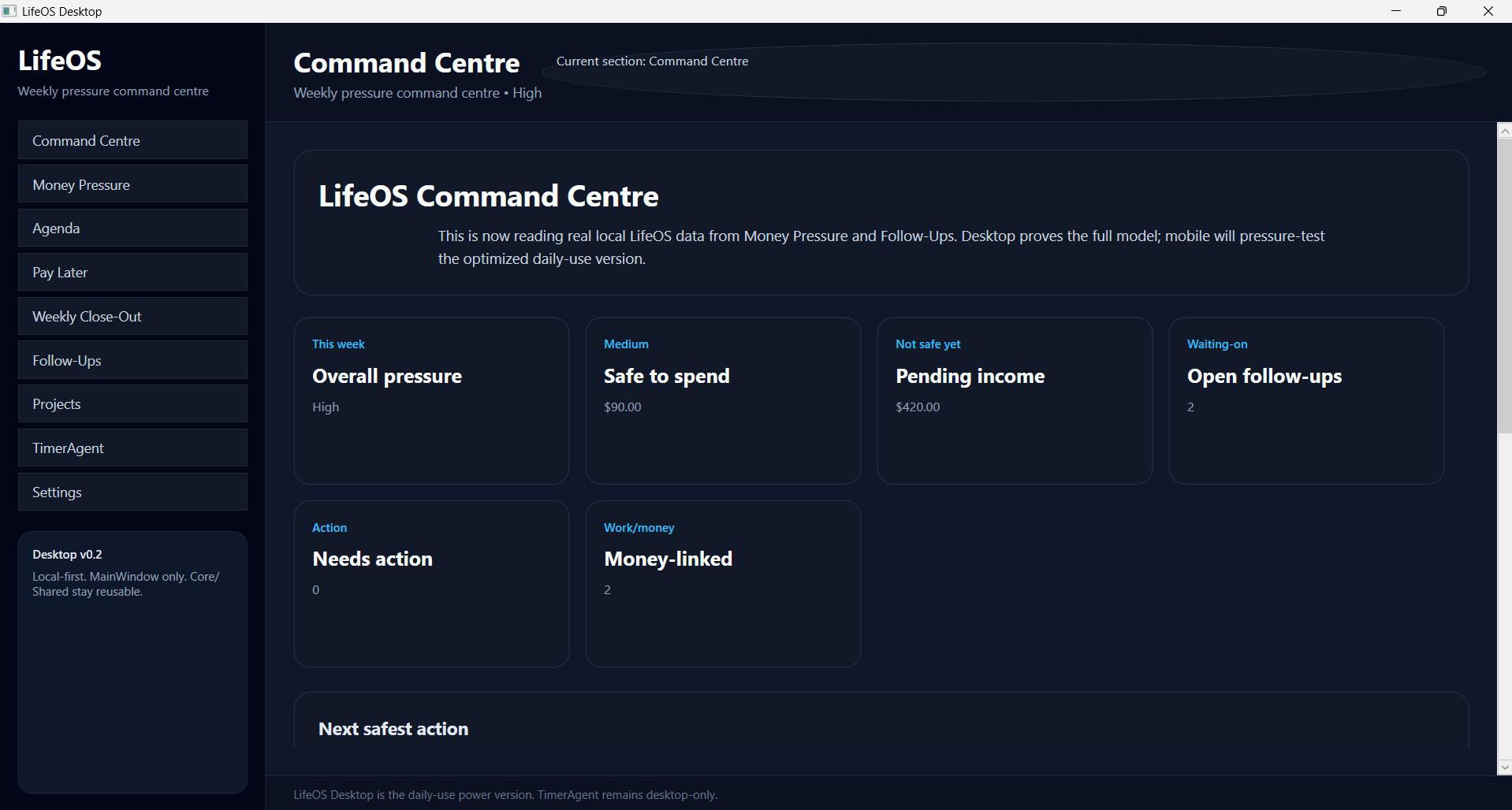
Important work, money pressure, follow-ups, projects and evidence can exist across too many disconnected places. LifeOS is built to turn that pressure into visible operational state rather than another flat task list.

01

Constraints

What the system had to respect.

  • The useful product has to work as a system, not as a collection of disconnected pages.
  • External integrations and AI cannot silently own or mutate core state.
  • Public portfolio claims must describe verified current capability rather than future roadmap items.
02

Approach

How the problem was shaped into software.

  • Use a shared domain model across desktop and mobile surfaces.
  • Treat follow-up, evidence, work, money and pressure as connected state.
  • Use review-first integration boundaries and explicit release evidence.
  • Advance through bounded build groups with build, test, screenshot, documentation and repository closure gates.
03

Proof

What can actually be inspected.

  • Desktop and mobile product surfaces.
  • Cross-module command-centre workflows.
  • Versioned implementation, regression and screenshot evidence.
  • Public product documentation and release packaging.
04

Limitations / boundaries

What is deliberately not overstated.

  • LifeOS remains an active flagship product; future roadmap capabilities are not presented as already shipped.
  • External-provider behavior depends on provider/API availability and permission boundaries.